
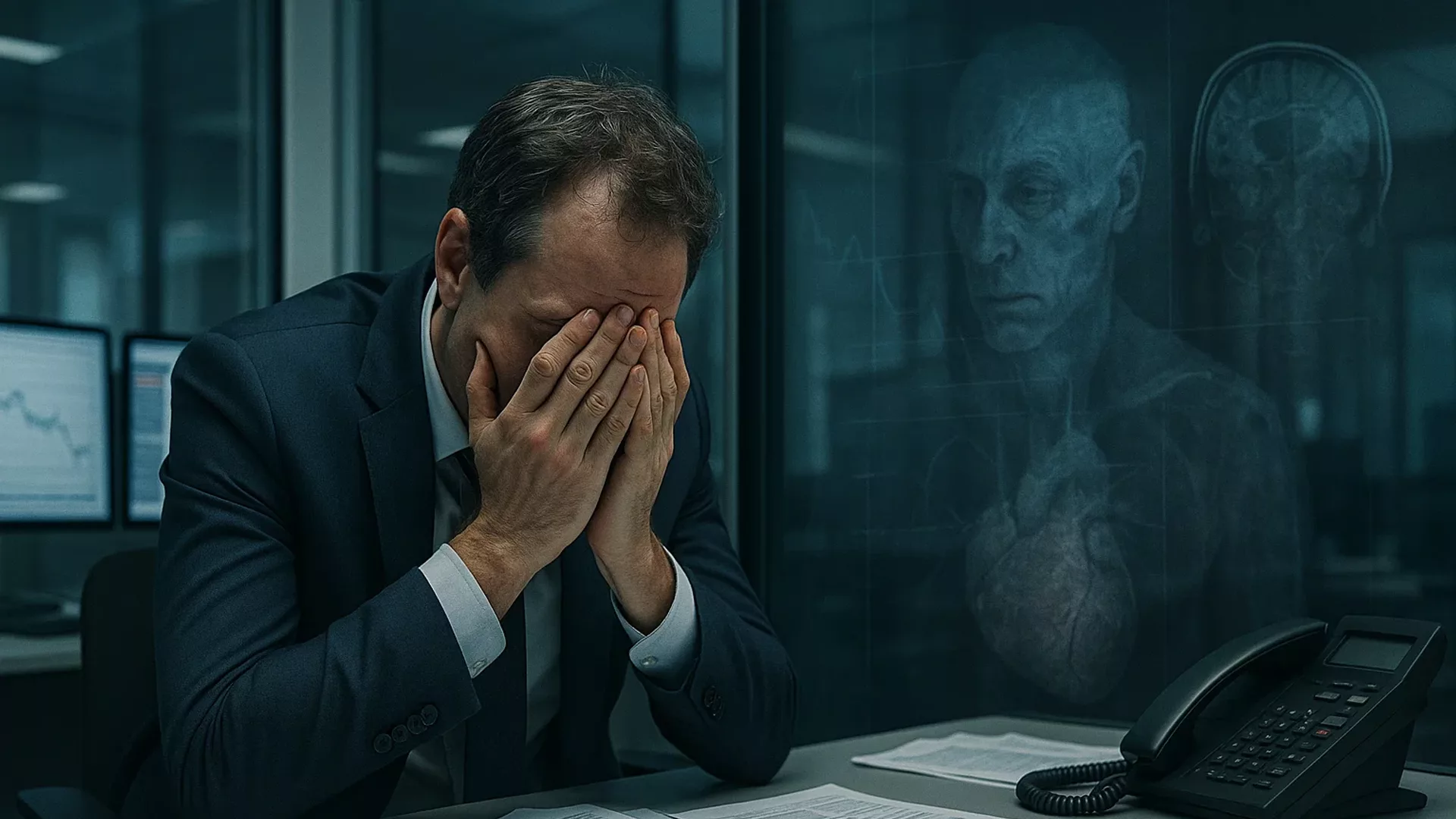
Let's talk stress. Health and employee management don't seem to have made much sense together in recent years. At least that's what the statistics tell us. «Managers are more than 70 % more likely than non-managers to be concerned about their mental health and their ability to manage the situation, or to indicate that they feel in crisis».»[1]
As a management coach and naturopath, I regularly help my clients through crisis situations that go well beyond the organisational context. Panic attacks, anxiety, sleep problems, poor diet, a sedentary lifestyle... These are just some of the key words that often come up in our discussions.
They all have one thing in common: no time to look after themselves!
Most managers are dedicated people. They don't count their hours and their worries don't stop when the normal working day is over. The hamster keeps rolling on the way home in the car, at the table during family dinner and even with its head comfortably crushed into the pillow. The mental load almost never leaves them. And that's a big problem.
Who's going to pick you up when you fall?
That's the question I often ask people who tell me they can't stop. Do you know what? Being a manager means always finding solutions to problems, managing crises and anticipating what you can't control. It's magical thinking to believe that the pile will end or that the »go» to be given is only temporary.
The truth is that managing in 2025 is a lot more stressful than it was 20 years ago. Everything moves fast. Everything changes. Life is more complex. If you don't look after your health, no one else will.
I'm great at managing stress!
The words I repeated for years to those who asked me how I managed to do everything I did.
In reality, I was disconnected from my body and no longer listening to the signals. My stress had turned into chronic stress, unable to get back down to earth. That's what prompted me to do my naturopathy degree. I wanted to understand why my body wasn't responding the way it used to and why, all of a sudden, the dictators couldn't explain my physical symptoms. Because, yes, when your head refuses to listen, your body lets you down. And it becomes less fun.
Learn to listen to yourself to become a better manager.
YOU CAN'T PERFORM WELL IF YOU'RE ALWAYS STRESSED. That's it, in bold capitals. Chronic stress puts your body in a fight-or-flight state. Your sympathetic system gets activated and prevents the parasympathetic system from resting, helping the body repair itself and allowing cells to regenerate.
In addition, chronic fatigue plays its part in increasing the daily dose of coffee, thus increasing irritability. And exercise? Forget it. No time. Zero energy. Just the desire to eat some sugar, have a relaxing drink or, even better, a poutine and a beer to make sure your mind is knocked out. Can you really perform when your body is treated like a racing car on its last mile?
A healthy lifestyle is the foundation of performance.
It's impossible to be a good manager if your vehicle (your body) is damaged. Of course it's possible for a limited time... but sooner or later, reality catches up. Mental health problems, type 2 diabetes, overweight and obesity, autoimmune diseases, etc. Balance is the key to performance and balance is found in a healthy lifestyle.
Here's what you need to consider in your lifestyle:
- Is your sleep sufficient, adequate and restorative?
- Is your diet healthy or are processed foods your best friends?
- Do you have any hobbies that help you unwind?
- Do you do at least 150 minutes of physical activity a week (the minimum to avoid being considered sedentary)?
- Do you work a reasonable number of hours (ideally between 35 and 40 hours a week)?
- Do you maintain positive social relationships?
- Do you feel good about yourself? In your head?
- Do you feel bloated?
- Do you have memory lapses or blurred memory?
These questions will certainly help you take stock of your overall lifestyle. Most managers will recognise themselves in the questions above. They will probably smile, look up or sigh. Performance is intimately linked to lifestyle. Job satisfaction is linked to a healthy lifestyle.
Balance is the biggest challenge for managers
Remember. Stress leads to an increase in emotional reactions. And emotional reactions lead to distortions in judgement and decision-making. I remind you that managers spend their days solving problems and finding solutions. Do you see the connection? A top manager must take care of his or her health. Full stop.
[1] https://static1.squarespace.com/static/5f9978fdff01872f76f38a09/t/62a1f9f03852890d6bf57098/1654782450640/FR+-+Abridged+-+Emotional+Intelligence+Report.pdf 
IRegister for our 100% online training course on stress management: https://complx.ca/boutique/formation-gerer-son-stress-pour-trouver-lequilibre/