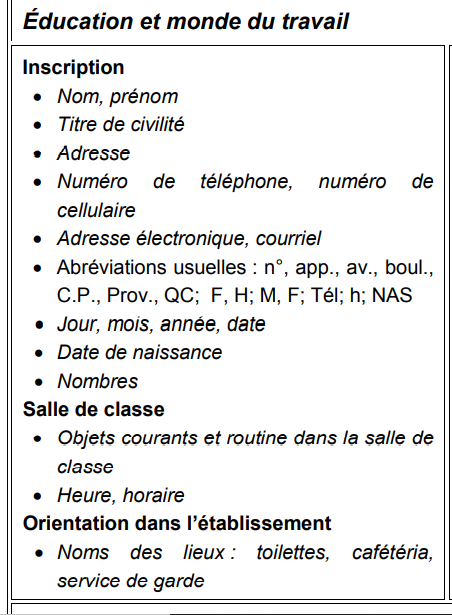
Complexe X offers a beginner's programme that enables learners to learn the alphabet and to count so that they can say a postcode and telephone numbers, addresses, amounts of money and the time by learning whole numbers and decimal numbers. There is a section on learning to pronounce numbers in the vocabulary book and audio support in Complexe Académie.
Saying numbers without being understood or hearing numbers without understanding them is not helpful in everyday life. Dictation of numbers with audio is there to work on auditory recognition in order to complement the skill of oral expression. Speaking and understanding are mutually dependent.
In the workplace, carpenters, cooks, engineers and many others need numbers to work. The vocabulary booklet includes not only numbers, but also the metric and imperial systems of measurement for both solid materials and liquids. Parallels are drawn between the most popular systems for different trades. For example, a learner who works in the construction industry, such as a plumber or joiner, will be surrounded by more people using the imperial system. Even for work around the house, in renovation centres, measurements are still largely imperial.
Another sub-element not mentioned in the programme is learning words related to time, so as to be able to give a date and find one's way through the seasons, months and days of the year.
In the workplace and in everyday life, these sub-elements are omnipresent, whether for making appointments (interviews, doctor, paediatrician, garage, hairdresser), organising the calendar (at work, school, family), knowing when a film is playing in the cinema or a show is taking place.
Complexe X proposes learning these elements from the outset, rather than by level, so that vocabulary can be expanded without waiting for the next level. Once learners know how to count and say months, days and years, they will be able to expand their opportunities for integration into Quebec.
Complexe X proposes to work with locations in a different way. First, the places of everyday life (grocery shop, library, post office, park, shop, bathroom/toilet, kitchen, living room, bedroom, different rooms, cafeteria). This includes the gender (masculine/feminine) as well as the prepositions that introduce them with the verb to go. The most commonly heard names of towns and countries and their gender are also worked on, using the prepositions that introduce them after the verb to go.
Learning French in Quebec means learning two languages: standard French and popular Quebec French.
Complexe X takes a quick start to learning Quebecois French, as soon as the learner knows enough sounds and the first 4 verbs to conjugate (avoir, être, aller, faire).
Learners learn Quebecois pronouns with these 4 conjugating verbs and quickly transform the sentences they construct in standard French into Quebecois French, much to their delight. In just a few weeks, they are able to recognise these pronouns and verbs in the workplace, which increases their motivation during lessons.
Throughout the site, you'll find Quebec or “en québécois” vignettes that draw parallels between standard and popular French. Exercises are provided to develop the popular language and understand local expressions such as “bin voyons dont” or “mets-en”.
The coaches do not hesitate to explain Quebec expressions or to ask learners how they would say their sentence in Quebecois, which adds the “language in the field” aspect for those who have colleagues they do not understand.
So at Complexe X we're not just talking about popular language, we're also learning and practising it, along with the phonetic transformations associated with it.